Mill Hill Skip Hire — Recycling and Sustainability Commitment
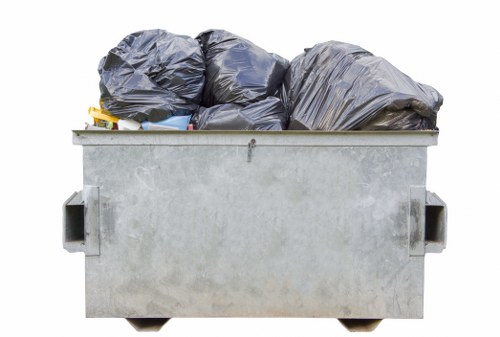 At Mill Hill Skip Hire we place sustainable rubbish area management and eco-friendly waste disposal area principles at the heart of every job. Our Mill Hill skip hire services focus on maximising reuse and recycling from domestic clear-outs, construction sites and community projects across the borough. We combine practical skip solutions with an active commitment to reduce landfill, lower carbon emissions and support local circular-economy initiatives.
Our recycling percentage target is ambitious: we aim for a 75% diversion rate of collected material from landfill by 2030. This target covers sorting at source, deposit separation and post-collection processing that channels materials into appropriate streams — glass, paper and cardboard, metals, plastics, textiles, green waste and recovered wood for biomass. The target aligns with emerging boroughs' approaches to waste separation, which increasingly emphasise kerbside recycling and food waste collections.
 We work closely with local transfer stations and processing centres to ensure materials enter the right recycling pathway. Local transfer stations in Barnet and neighbouring North London facilities act as crucial hubs where mixed loads are sorted and freighted to specialised recyclers. For heavier inert and construction & demolition (C&D) materials, designated transfer stations allow for crushing, screening and recovery of aggregates and soils for reuse in landscaping and building projects.
Practical recycling activity in the area
Mill Hill skips are used daily for a range of recycling activity relevant to the area: kitchen and food-waste separation for households, glass and bottle banks in local shopping parades, paper and cardboard from small businesses, and garden waste from residential properties. On construction sites we prioritise concrete, brick, metal and timber segregation to maximise material recovery. Our teams are trained to identify hazardous items and divert them safely to authorised facilities.
We also facilitate textile and bulky-item reuse by working with furniture donation networks and clothing re-users. Rather than consigning serviceable items to landfill, our sorting process separates salvageable furniture, working appliances and clean textiles for direct donation or refurbishment. This reduces waste tonnage and directly supports community needs.
 The borough's approach to waste separation — with clear streams for food, recyclables and general rubbish — complements our skip placement protocols. We advise customers on skip sizing and segregation options so that common recyclable fractions are kept separate at the point of collection, improving yield at the transfer station and reducing contamination rates.
Partnerships with charities and community groups
Our skip hire Mill Hill service maintains active partnerships with local charities, repair cafés and reuse organisations. These collaborations enable collected goods to be diverted to practical reuse: working white goods go to refurbishment charities, usable furniture is channelled to local family support groups, and surplus materials support community allotments and educational projects. We prioritise partners that demonstrate transparent reuse chains and strong social benefit.
Examples of partnership activity include scheduled drop-offs of reusable items to community hubs, bulk textile donations to clothing re-processors, and joint collection days with neighbour charities to recover household items. These efforts are built into our sustainable rubbish area strategy and help increase the social value of recycling operations in Mill Hill and surrounding wards.
To ensure accountability, we document the flow of donated items and report diversion figures as part of our corporate sustainability metrics. These records help track progress toward the 75% recycling percentage target and identify opportunities for improvement.
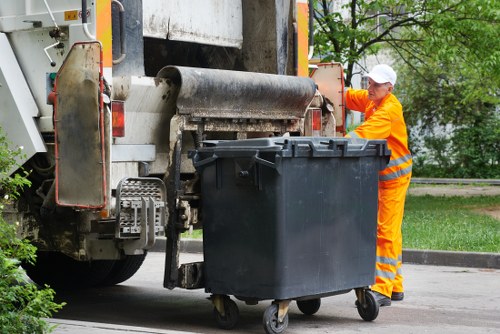 Low-carbon vans and fleet choices are a core part of how we reduce the environmental footprint of skip delivery and collection. Our fleet includes a growing number of electric and hybrid vehicles, route-optimised logistics, and driver eco-training programmes. By combining smaller low-emission vans for light loads with efficient larger units for heavy lifts, we cut emissions and reduce noise in residential areas.
We also invest in fuel-efficient routing software to minimise mileage and emissions on each job. The combination of electric vehicles, careful scheduling and local transfer station usage results in measurable reductions in CO2 compared with traditional, non-optimised skip operations. These steps support both the eco-friendly waste disposal area ethos and the wider borough climate commitments.
 Mill Hill Skip Hire champions transparent, measurable sustainability. We publish annual diversion rates, partner activity summaries and fleet upgrade timelines to show progress. Our service offers tailored skip options that support on-site segregation, prioritise reuse, and channel recyclables to accredited processing centres. By choosing Mill Hill skips, customers contribute to a local circular economy and a more sustainable rubbish area across the borough.
In summary, our Mill Hill waste services blend practical skip hire operations with a clear environmental agenda: a 75% recycling percentage target, strong ties to local transfer stations, active partnerships with charities, and a transition to low-carbon vans. Together, these elements make our approach to the eco-friendly waste disposal area both effective and community-minded — reducing landfill, supporting reuse, and lowering transport emissions for a greener Mill Hill.